
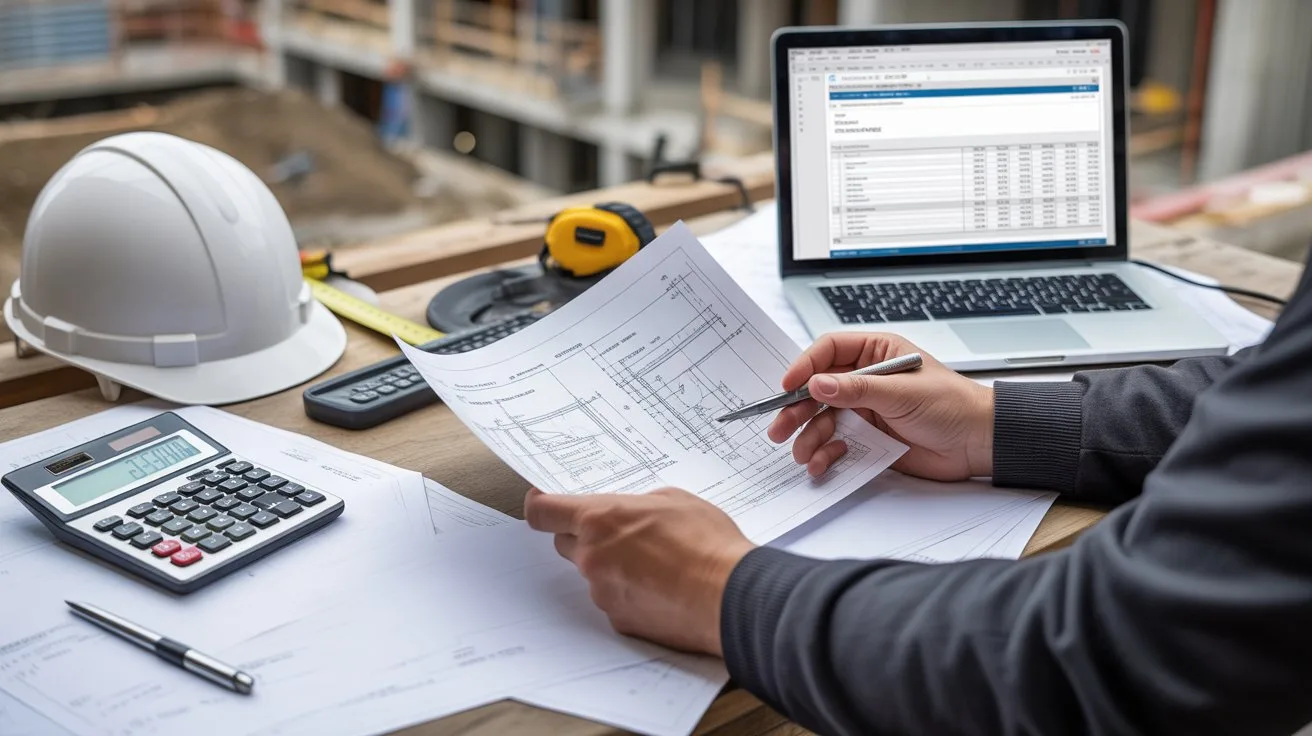
What is Construction Estimation? A Complete Guide for Beginners
Learn what construction estimation is, how it works, types of estimates, and why accurate cost calculation is critical for contractors.
Construction estimating is the process of calculating the total cost required to complete a construction project. It includes materials, labor, equipment, subcontractor costs, overhead, and profit. The purpose of construction estimating is to determine how much a project will cost before work begins, so contractors can submit accurate bids and avoid financial losses.
In simple terms, construction estimating answers one critical question:
“How much will this project actually cost to build?”
Whether the project is residential, commercial, or industrial, accurate estimating is the foundation of every profitable construction job.
Why Construction Estimation is Important
Construction estimation directly impacts:
-
Profitability
-
Bid success rate
-
Project planning
-
Cash flow management
-
Risk reduction
An accurate estimate ensures:
-
The contractor knows expected costs
-
The client understands pricing
-
The project budget is realistic
-
Unexpected losses are minimized
In short, estimating protects both time and money.
Types of Construction Estimates
Different stages of a project require different types of estimates.
1. Preliminary Estimate (Conceptual Estimate)
Prepared during the early design stage. Based on limited information and historical data.
2. Detailed Estimate
Prepared when drawings and specifications are complete. Includes item-by-item cost breakdown.
3. Quantity Takeoff Estimate
Focuses on measuring quantities of materials from blueprints before pricing them.
4. Bid Estimate
Prepared specifically for submitting a competitive bid to win a project.
Each type serves a different purpose, but all aim to forecast cost accurately.
What is Included in a Construction Estimate?
A professional construction estimate typically includes:
1. Material Costs
Concrete, steel, lumber, drywall, wiring, plumbing fixtures, etc.
2. Labor Costs
Workforce wages based on estimated hours and productivity rates.
3. Equipment Costs
This includes machinery rentals, fuel, and maintenance.
4. Subcontractor Costs
Electrical, plumbing, HVAC, roofing, etc.
5. Overhead Costs
This cost includes the office expenses, insurance, utilities, and permits.
6. Profit Margin
The contractor’s intended earnings from the project.
Construction Estimating vs Quantity Takeoff
These two terms are often confused.
Quantity Takeoff: Measures the quantities of materials required from drawings (e.g., 2,000 sq ft of drywall).
Construction Estimating: Takes those quantities and assigns pricing (materials + labor + overhead + profit).
Quantity takeoff is one part of the estimating process, not the entire process.
How the Construction Estimating Process Works
Here’s a simplified workflow:
-
Review Project Documents
Drawings, blueprints, scope of work, and specifications are analyzed.
-
Perform Quantity Takeoff
All measurable materials are quantified.
-
Apply Unit Costs
Material and labor rates are assigned to quantities.
-
Add Indirect Costs
Overhead, permits, supervision, and equipment are included.
-
Add Profit Margin
A percentage is added to ensure profitability.
-
Final Review and Submission
The estimate is checked and formatted into a bid proposal.
Who Uses Construction Estimating?
Construction estimating is used by:
-
General Contractors
-
Subcontractors
-
Builders
-
Developers
-
Construction Managers
-
Estimating Companies
Small contractors rely on it to compete effectively. Large firms depend on it to manage risk across multiple projects.
Common Mistakes in Construction Estimating
Beginners often make these mistakes:
-
Missing items in takeoffs
-
Using outdated material prices
-
Underestimating labor productivity
-
Forgetting overhead costs
-
Rushing the review process
Even small errors can lead to significant financial losses.
Frequently Asked Questions
1. What is construction estimating in simple terms?
Construction estimating is the process of calculating the total cost of a construction project before work begins, including materials, labor, equipment, overhead, and profit.
2. What does a construction estimator do?
A construction estimator reviews project drawings, performs quantity takeoffs, calculates costs, prepares bids, and ensures pricing accuracy to help contractors win profitable projects.
3. Why is construction estimating important?
Construction estimating is important because it determines project profitability, reduces financial risk, and increases the chances of winning competitive bids.
4. What is the difference between estimating and bidding?
Estimating is the process of calculating project costs, while bidding is the act of submitting that estimate to compete for a project.
5. How is construction estimating done?
Construction estimating is done by reviewing blueprints, measuring material quantities, applying labor and material costs, adding overhead, and including profit margins.
6. What are the main types of construction estimates?
The main types include preliminary estimates, detailed estimates, quantity takeoffs, and bid estimates.
7. What software is used for construction estimating?
Common estimating software includes PlanSwift, Bluebeam, RSMeans, and ProEst. However, software supports the process — it does not replace professional judgment.
8. How long does it take to prepare a construction estimate?
It depends on project size and complexity. Small residential projects may take a few hours, while large commercial projects can take several days.
9. What information is needed to prepare an estimate?
Estimators need architectural drawings, structural plans, specifications, scope of work, and current material and labor pricing data.
10. What is a quantity takeoff in construction?
A quantity takeoff is the process of measuring and listing all material quantities required for a project based on drawings.
11. How accurate should a construction estimate be?
A detailed construction estimate should aim for high accuracy, typically within 5–10% of actual project cost, depending on project stage.
12. Can construction estimating be outsourced?
Yes, many contractors outsource estimating services to save time, reduce overhead costs, and improve bid efficiency.
13. What happens if a construction estimate is too low?
If an estimate is too low, the contractor may win the bid but risk financial losses due to underestimated costs.
14. What happens if a construction estimate is too high?
If an estimate is too high, the contractor may lose the bid to competitors offering lower pricing.
15. Is construction estimating a good career?
Yes, construction estimating is considered a stable and in-demand career, especially in growing construction markets.
16. What skills are required for construction estimating?
Key skills include blueprint reading, cost analysis, attention to detail, math proficiency, and knowledge of construction methods.
17. What is included in a construction cost estimate?
A construction cost estimate includes materials, labor, equipment, subcontractor costs, overhead expenses, and profit margin.
18. What is the role of overhead in construction estimating?
Overhead covers indirect expenses such as office rent, insurance, supervision, permits, and utilities that are necessary to run the business.
19. How do contractors improve estimating accuracy?
Contractors improve accuracy by updating price databases, reviewing past project data, double-checking takeoffs, and using experienced estimators.
20. What is the goal of construction estimating?
The goal of construction estimating is to predict total project cost accurately so contractors can submit competitive and profitable bids.
Final Thoughts
Construction estimating is the backbone of every successful construction project. It determines whether a contractor wins a job and whether that job makes a profit.
For beginners, understanding estimating fundamentals is the first step toward building a stable and profitable construction business.
Accurate estimates are not just numbers; they are strategic decisions that define project success.